Your process is not broken; it is complicated.

Fixed-fee process diagnostics for professional services firms. Three weeks, eight scored dimensions, and a roadmap you can act on.

THE PROBLEM

Nothing looks wrong. That is the problem.

Most professional services firms are not broken; they are carrying quiet drag. The work gets delivered, invoices go out, and reports run on schedule. Underneath that steady output, time slips away in small, predictable ways. Projects take longer to set up than anyone admits. Finance rebuilds numbers because "just to be safe" has become standard practice. A workaround from years ago still dictates a key step, long after its logic disappeared.

Nothing is visibly wrong. Every day, though, your team spends hours it never meant to spend.

None of this registers as a failure. It is margin you cannot explain, and a team that is busier than the work should require.

WHAT THIS IS

A diagnostic, not an opinion.

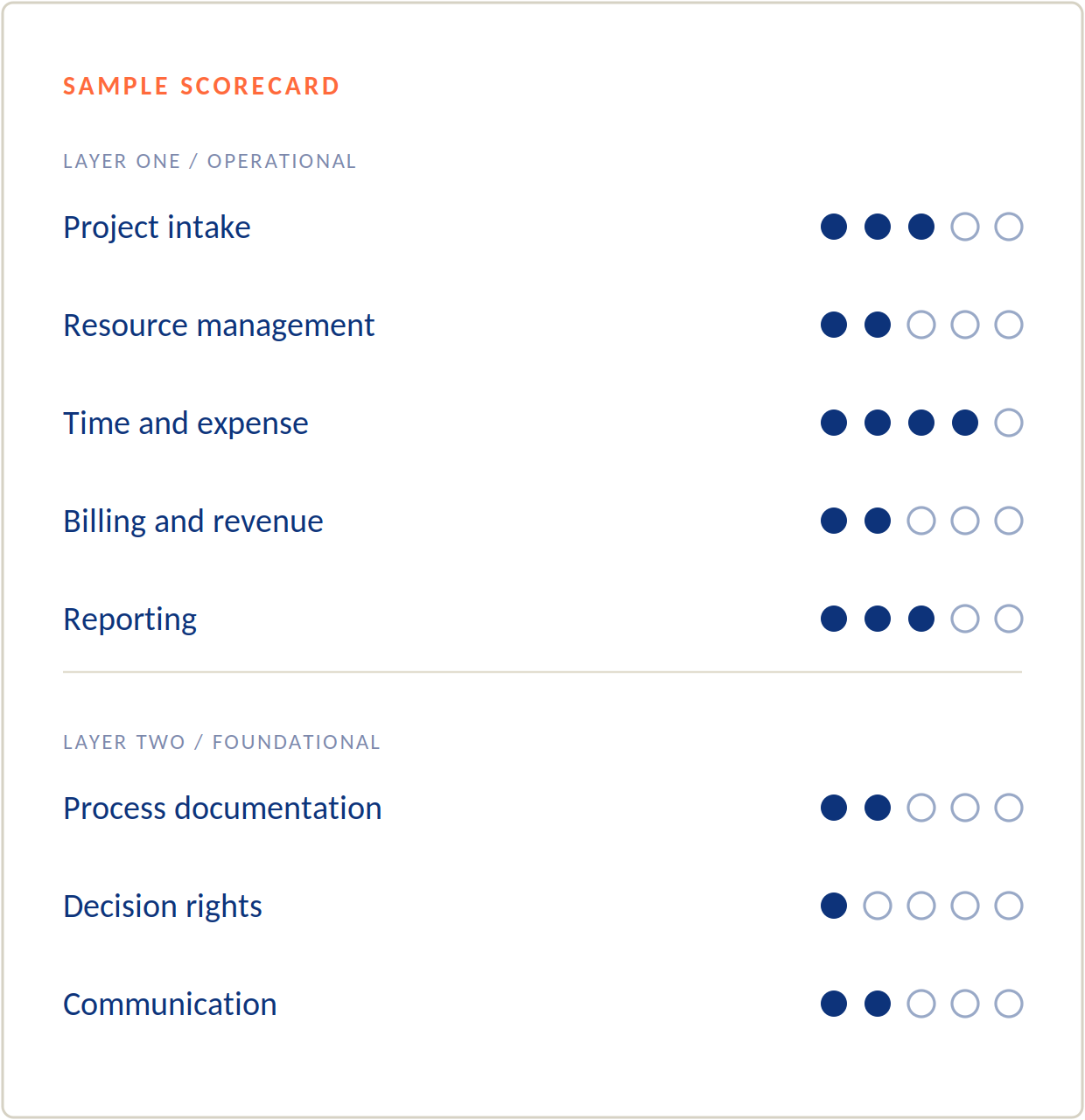
Three weeks. Eight dimensions of your delivery-to-cash process, each scored against a defined maturity scale. Two working sessions with your team, three short conversations with your leaders, and a documented map of how the work moves in practice rather than on paper.

You receive four levers:

  • A scored assessment across all eight dimensions, with the evidence behind every number

  • A current-state map of how work really moves from delivery to cash, not how the process doc says it should

  • A clear, evidence-based read on where AI can genuinely accelerate your operations, and where it cannot

  • A prioritized, effort-weighted roadmap that shows exactly what to fix, in what order, and the impact each change will create

What you do not receive is a sales proposal dressed as a report. Items your team can fix without help are marked as items your team can fix without help.

THE DIFFERENCE

The workflow was never the hard part.

Process improvements fail for reasons that have very little to do with the process itself:

  • No one owned the decision, so it was deferred until it made itself

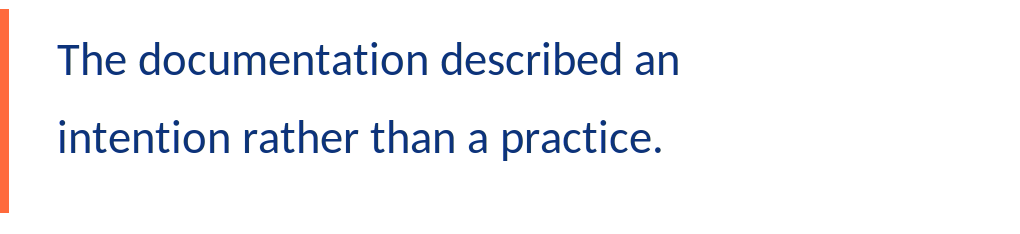
  • The documentation described an intention rather than a practice

  • Finance and Delivery each assumed the other had it handled

This is why the diagnostic scores two layers. The operational layer identifies where your process breaks; the foundational layer determines whether a fix will survive contact with your organization.

Process improvements fail for reasons that have nothing to do with the process. Nobody owned the decision. The documentation described an intention rather than a practice. Finance and Delivery each assumed the other had it handled. If you have tried to fix this before and it did not hold, one of those three is usually the reason.
WHO YOU ARE WORKING WITH

Twenty years of watching this go right and go wrong.

I have spent two decades in professional services operations and have led more than seventy-five end-to-end implementations and optimizations. I have been PMP certified since 2012; before any of it, I trained in social work.

That combination explains what I look for. Most process fixes fail because someone designed a better workflow and no one adopted it. I diagnose the workflow and the adoption conditions together, because separating them is why the problem keeps returning.


More about how I work

Start with a conversation.

Thirty minutes, no slides. Describe what is not working, and I will tell you plainly whether a diagnostic is the right next step. Sometimes it is not.